Father of 3 Discovers a Simple Step-by-Step Method That Stopped His 8-Year-Old Son's Bedwetting Completely — After 3 Years of Midnight Wake-Ups and Broken Sleep Did Nothing
Without shame, alarms, scolding, or punishment. Just a structured routine that helps a child's body finish doing what it was already trying to do.

Written by Eli Amara · Calm Nights
You already know how tonight will probably go.
You tuck them in. You say goodnight. And somewhere around 2am, you feel the dampness through the sheet. Again.
The same wet mattress. The same pile of washing before the house wakes. The same quiet worry you have carried for months — maybe years.
You have tried what everyone told you to try:
- You stopped giving water in the evening.
- You wake them at midnight to use the toilet — sometimes twice.
- You tried an alarm. It woke you, not the child.
- You put a rubber sheet on the mattress.
- You even tried the remedy a relative swore by.
And the bed is still wet in the morning.
But the washing is not the hardest part. The hardest part is everything around it — the sleepover invitation you quietly made an excuse to avoid, the school trip you said no to, the visit to relatives during the holidays that you dread, the boarding-school conversation you keep postponing because you both know they are not ready.
And then there is the family.
Nobody understands. Your child is not lazy and is not doing it on purpose. They are asleep — they do not even know it is happening. But they are beginning to feel ashamed. You see it in the way they check their own bed first thing every morning, and the way they go quiet when other children talk about sleeping over.
My name is Eli.

I am not a doctor. I am not a nurse. I am not a child psychologist.
I am a father. My roots are in Africa, and I have raised my children through the kind of parenting problems that do not appear in any handbook. I write about the side of parenting that tutors and doctors rarely touch: the behaviour, the confidence, the quiet struggles families search for privately, late at night, because they feel too embarrassing to say out loud.
For a long time, bedwetting was one of those struggles in my own home. It started young, the way it does for many children. I told myself he would grow out of it. He turned six. Still wet. Seven. Still wet. By eight, I was genuinely worried.
A doctor checked him over, found nothing physically wrong, and said the sentence almost every parent hears: "Some children are just deep sleepers. He will outgrow it. Be patient." But I had been patient for years. I was washing sheets at dawn, setting alarms for 1am and 3am, carrying a sleeping child to the toilet in the dark. "Wait and hope" was not a plan.
So I treated it the way I treat any problem I cannot solve by instinct: as a system, not a character flaw. I read the actual paediatric research, worked out why the common fixes fail, and built a simple, structured routine around what the evidence supports.
What I learned changed how my whole family slept.
Here is what no one had explained to me
Bedwetting in a child over five is usually not a behaviour problem. For most children it is a developmental delay in one specific function — the signal between bladder and brain that should either wake them or hold the urine while they sleep.
In many children that signal matures on its own by around age five. In a meaningful share — paediatric continence research puts it at roughly one in seven school-age children — it simply takes longer. That is the whole story. Not laziness. Not stubbornness. Not too much water. A signal that has not finished connecting yet.
And here is the part that matters most: several of the common "solutions" can make things harder.
- Strictly limiting fluids can leave a child thirsty and the urine more concentrated, which irritates the bladder.
- Waking them at midnight trains you to be the alarm clock — it does not train their brain to notice the signal.
- Punishment and shame raise a child's anxiety, and anxiety is linked to more wetting, not less.
The approach the evidence supports works on three things together:
Daytime bladder training
A few simple five-minute exercises that strengthen the bladder-brain connection. To a child, it feels like a game.
A calm evening routine
A specific, repeatable sequence before bed that prepares the body for a dry night.
Confidence, not shame
A reward system that recognises effort and progress, so the child's confidence grows instead of cracking.
No drugs. No herbs. No alarms. No midnight wake-ups. Just a structured routine that helps a child's body finish the development it was already working toward.
When I started using this with my own son, I did not expect much. I had been disappointed too many times.
The early days looked like nothing was changing — and the routine told me to expect exactly that. Then came the first morning he walked himself to the toilet before dawn, something he had never done. Then a few dry nights in a row. Then a stretch where dry simply became normal.
The morning he checked his own bed and looked up with a small, proud smile, I had to step out of the room. Children should not grow up believing something is wrong with them over something they cannot control. He had his confidence back, and I had my sleep back.
I shared the routine quietly — first with one friend, then another, then a parents' group. The pattern held more often than not: a calmer child, a clear routine, and dry mornings arriving steadily rather than by luck. Children differ — some settle quickly, some take longer — but the routine works because it addresses the root, not the symptom.
Eventually I could not keep explaining it one message at a time. So I put all of it into one simple resource.
The Dry-Night System
A calm, structured routine to help your child sleep dry — written for African families, in plain language, with a clear day-by-day plan.

This is not a medical textbook. There is no jargon and there are no confusing diagrams. It is written the way I wish a calm, experienced parent had sat me down and explained it years earlier.
Real parents. Real mornings.
A few notes from parents who used the routine.
My daughter is 10 and had wet the bed for as long as I can remember. The bladder exercises were so simple she thought we were playing. Her first dry night came in the first week, and within a fortnight it was steady. She slept over at her cousin's for the first time last month. I cried.
My son is seven and his younger brother had already stopped, which was crushing his confidence. The explanation about the bladder-brain signal finally made me understand it was not his fault. We followed the plan and the dry nights came in the second week. I used to wash sheets every single day.
People around me said it was spiritual, or that I should use the cane. This was the first thing that explained it calmly and clearly: developmental, not a punishment matter. We followed the routine and the wet nights faded out. His confidence is what I am most grateful for.
The progress chart was the turning point. My daughter filled it in herself every morning and on dry nights she drew a star with the biggest grin. On harder mornings we simply said "that is okay, your body is still learning" and moved on. By the end the chart was full of stars and she carries it like a trophy.
I took my daughter to the GP twice and was told she would grow out of it. My sister back home sent me this. The exercises are sensible and the evening routine is the part that changed things for us. She has been dry for over a month and went to her first sleepover. I have recommended it to every African mum I know here.
Let us talk about the price
Think about what this has already cost you — not only the money, but the broken sleep and the worry:
- Hospital visits and checks: $20–$60
- A bedwetting alarm bought online: $20–$45
- Extra mattress protectors and rubber sheets: $10–$25
- Remedies that did nothing: $5–$20
- Extra water, detergent and electricity for washing — every week
- The broken sleep and the worry — paid nightly
The full Dry-Night System — the day-by-day plan, the bladder exercises, the evening routine, the progress chart and both bonuses — costs less than a single hospital consultation.
Secure checkout. Instant access within minutes of payment.
Pay by 💳 card🏦 bank transfer📱 mobile money
Two free bonuses, included today
The Parent's Script Book
The calm phrases to use on hard mornings — and the ones to avoid — so every conversation protects your child's confidence.

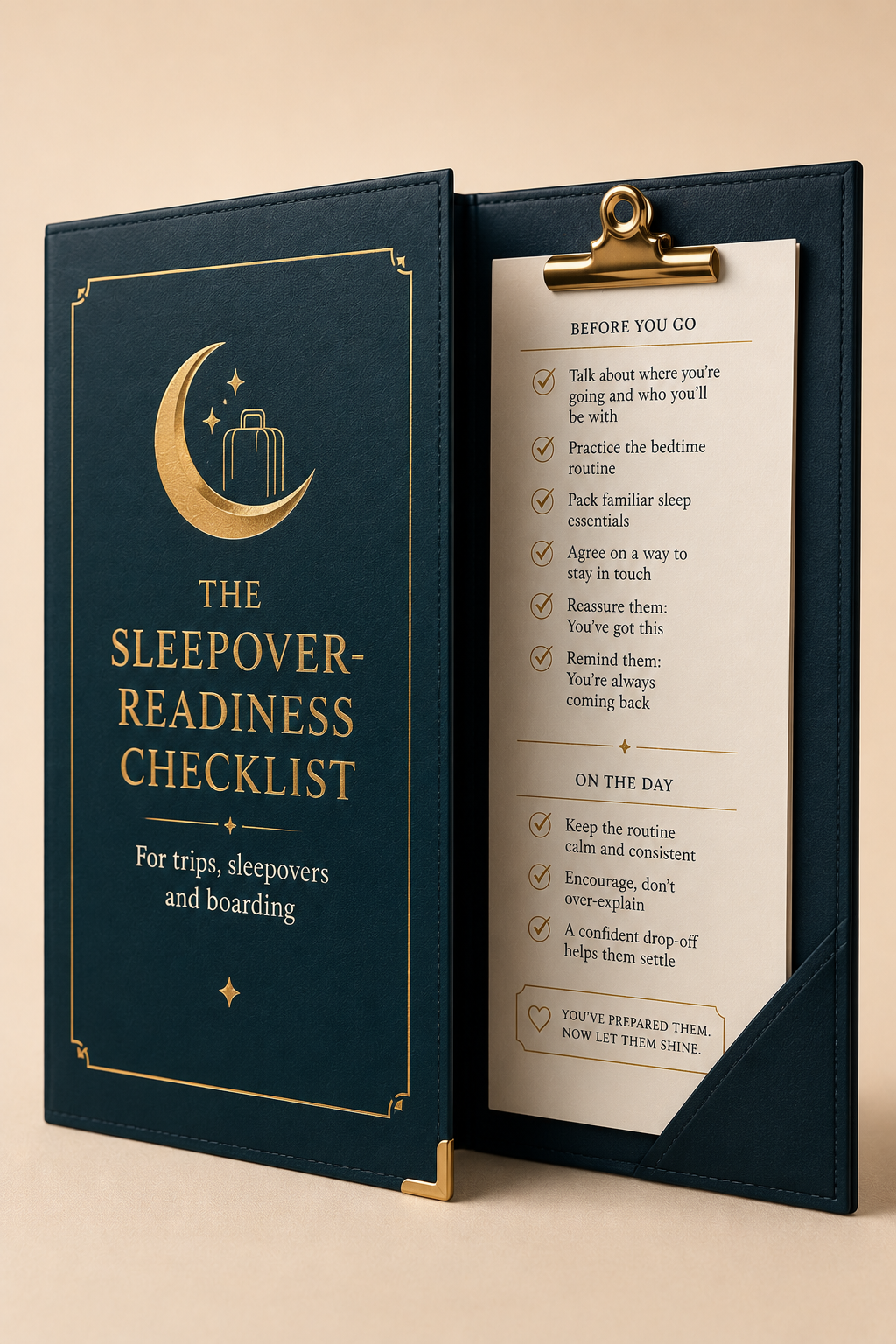
The Sleepover-Readiness Checklist
How to know when your child is ready for a sleepover, a trip, or boarding — and how to set them up to succeed away from home.
The 30-day keep-everything guarantee
Get the system today and follow the routine with your child. If within 30 days you feel it has not helped — for any reason — send one message and you will get a full refund. You keep the guide and both bonuses regardless.
Either you see calmer, drier nights, or you pay nothing.
Start the Dry-Night System — risk free →Right now you have two choices
Get the system today, begin the plan, and watch the wet mornings fade — calmly, step by step, the way they did in my home.
Set the 2am alarm again. Carry your child to the toilet in the dark. Wash the sheets at dawn. And wonder how many more months this continues.
Your child is not broken. They simply need the right routine — and a parent calm enough to follow it through. You have just found both.
Get The Dry-Night System now →just got The Dry-Night System · a few minutes ago